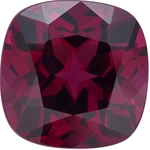
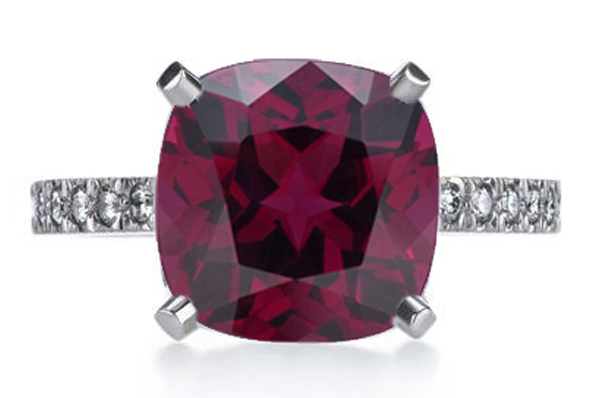
Rhodolite derives its name from the Greek word “rhodon” meaning “rose”. The name “garnet” comes from the 14th century Middle English word “gernet” meaning “dark red” and is possibly a reference to the “pomegranate”, a plant whose abundant, vivid red arils contained in the fruit are similar in shape, size and colour to some garnet crystals.
Deposits are found in Brazil, India, Sri Lanka, Tanzania, Thailand and the USA (North Carolina).
Garnets have been used since the Bronze Age as gemstones and abrasives throughout the Orient and amongst the Greeks and Romans. The latter frequently utilised them for engraving, whilst in India and the far east garnet was known as an amulet against poison and the plague. It was worn to attract health and cheerfulness, and as a protection against lightning.
In 1996 a university student unearthed, in central Australia, what is believed to be the largest single garnet find ever. This giant rough mineral is said to weigh thousands of tons and measures nearly one hundred feet wide.
Rhodolite is one of the birthstones for January. They have a rating of 7-7.5 (out of 10) on the Moh’s Scale of Hardness.